


If you are searching for a Long Island chiropractor for posture problems, you may be noticing more than simple slouching. Maybe your neck feels tight after work, your shoulders creep upward at your desk, or your back feels stiff when you stand up after sitting.
Posture is not about forcing yourself into one perfect position all day. It is about how your joints, muscles, work habits, stress level, and daily movement patterns work together. This article is educational only. If symptoms persist or worsen, schedule an evaluation with a qualified clinician.
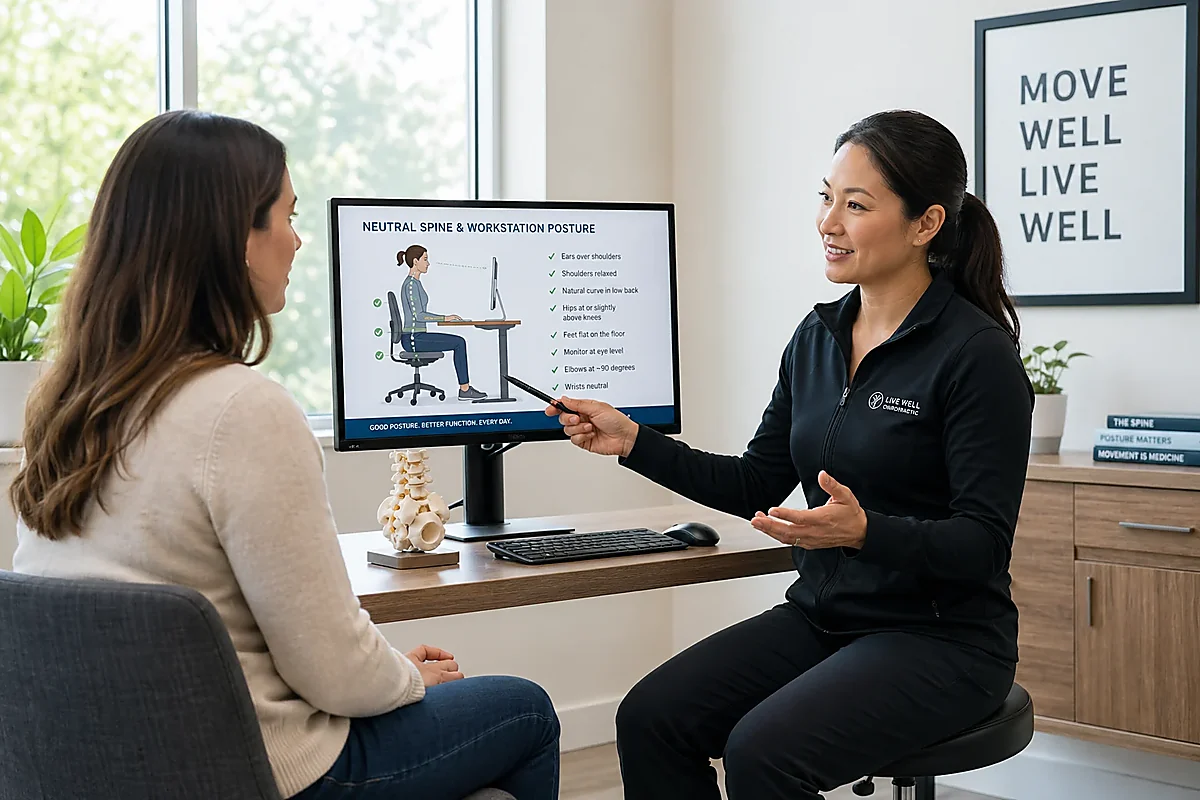
Individual needs vary, so care should be personalized after an appropriate assessment. A conservative care plan may include chiropractic care, acupuncture, massage therapy, or cupping depending on the evaluation.
7 Signs to See a Long Island Chiropractor for Posture Problems
Many people wait until posture-related discomfort becomes part of their daily routine before asking for help. You do not need to label your symptoms as serious to benefit from a professional evaluation. The signs below are common reasons people decide it is time to learn what may be contributing to their posture concerns.
1. Your desk posture pain keeps returning
Desk posture pain often shows up after long stretches of sitting, laptop work, phone use, or driving. You may feel tightness across the upper back, pressure near the base of the neck, or soreness in the low back by the end of the day.
This does not mean your desk is the only problem. A clinician may look at your workstation, sitting habits, hip mobility, spinal motion, and how often you change positions. For general workplace ergonomics, the CDC NIOSH ergonomics resources offer helpful background on reducing strain during work tasks.
2. Neck and shoulder tension is part of your normal day
Neck and shoulder tension can be related to many factors, including sustained screen use, stress, breathing patterns, weak or overworked muscles, and limited upper back motion. A posture evaluation does not diagnose the cause from posture alone. Instead, it helps identify which factors may be relevant for you.
If symptoms are severe, sudden, or paired with unusual signs, it is important to use caution. MedlinePlus provides general information about neck pain symptoms and when to seek medical help.
3. You feel stiff when you stand up or start moving
Posture concerns are not limited to how you look while sitting. Stiffness after sitting, difficulty getting comfortable, or feeling like your back needs to loosen up before you move normally can all be worth discussing with a clinician.
An evaluation may include checking spinal and hip mobility, muscle tenderness, balance between the front and back of the body, and how your movement changes when you sit, stand, bend, or rotate.
4. Your posture looks different in photos or mirrors
You may notice rounded shoulders, a forward head position, uneven shoulder height, or a tendency to lean to one side. These observations do not automatically mean something is wrong. Bodies are not perfectly symmetrical, and posture changes throughout the day.
Still, if visual changes come with discomfort, stiffness, reduced confidence moving, or recurring soreness, an evaluation can help separate normal variation from patterns that may benefit from conservative support.
5. Stretching helps briefly, then the same tightness returns
Stretching can feel good, but repeated tightness may involve more than one short muscle. Joint motion, strength, endurance, work setup, sleep position, and movement variety can all play a role. This is why a quick stretch may offer temporary relief without addressing the broader pattern.
For some people, hands-on care combined with simple movement strategies may improve comfort and mobility. For others, the priority may be ergonomic changes, strength work, or reducing long periods in one position.
6. You are changing activities because of discomfort
If you avoid workouts, shorten walks, skip hobbies, or feel distracted at work because of posture-related discomfort, it may be time to get evaluated. The goal is not to push through symptoms or ignore your body. The goal is to understand what is happening and choose reasonable next steps.
Mayo Clinic notes that staying active and using back-friendly habits can be part of a general approach to back health. You can read more from Mayo Clinic about back pain prevention and healthy movement habits.
7. You want guidance before symptoms become a bigger barrier
You do not have to wait for intense pain to ask questions. Many people seek posture guidance because they want to understand how to sit, stand, lift, exercise, and work with less strain. A chiropractor for posture can discuss practical habits and help you decide whether conservative care makes sense.
What a Posture Evaluation May Look At
A posture evaluation should be more than a quick glance at how you stand. A thoughtful assessment may review your symptoms, goals, work demands, exercise routine, sleep habits, and past health history. Your clinician may also observe how you move through everyday patterns.
Movement, joint motion, and muscle balance
Posture is dynamic. A clinician may check how your neck, mid back, low back, shoulders, hips, and ribs move. They may look for areas that seem stiff, overworked, guarded, or less coordinated. This information can help shape a plan that is specific to your needs.
Work habits, sleep positions, and daily routines
Small daily habits can add up. Laptop height, phone position, chair support, commute time, pillow setup, and exercise variety may all influence how your body feels. A posture-focused visit may include practical suggestions you can test in real life, not just instructions to sit up straight.
What Conservative Care May Include
When people search for poor posture treatment, they are often looking for a plan that helps them feel and function better without overcomplicating care. Conservative options vary based on the evaluation, your comfort level, and your goals.
Chiropractic care and movement guidance
Chiropractic care may be used to support joint mobility, reduce mechanical tension, and improve comfort during movement. It may also include posture education, home mobility work, and activity modifications. Care should not be presented as a certain way to permanently change posture. A realistic plan focuses on support, comfort, movement quality, and self-management.
Massage, acupuncture, or cupping when appropriate
Some posture-related concerns involve muscle tightness, stress tension, or soft tissue sensitivity. In those cases, massage therapy may be considered as part of a broader plan. Acupuncture at Back 2 Health or cupping therapy may also be discussed depending on the evaluation and your preferences.
Combined care is not necessary for everyone. The best next step depends on your symptoms, health history, exam findings, and goals.
When to Get Evaluated, and When to Seek Urgent Care
Consider scheduling an evaluation if posture-related discomfort lasts more than a short period, returns often, interferes with work or sleep, or makes you avoid normal activities. An evaluation can help you understand whether conservative care is appropriate and which habits may be worth changing first.
Seek urgent care or emergency services for severe or worsening symptoms. This is especially important if pain is sudden or intense, or if it comes with chest pain, fainting, fever, unexplained weight loss, new weakness, numbness, trouble walking, loss of coordination, or changes in bowel or bladder control.
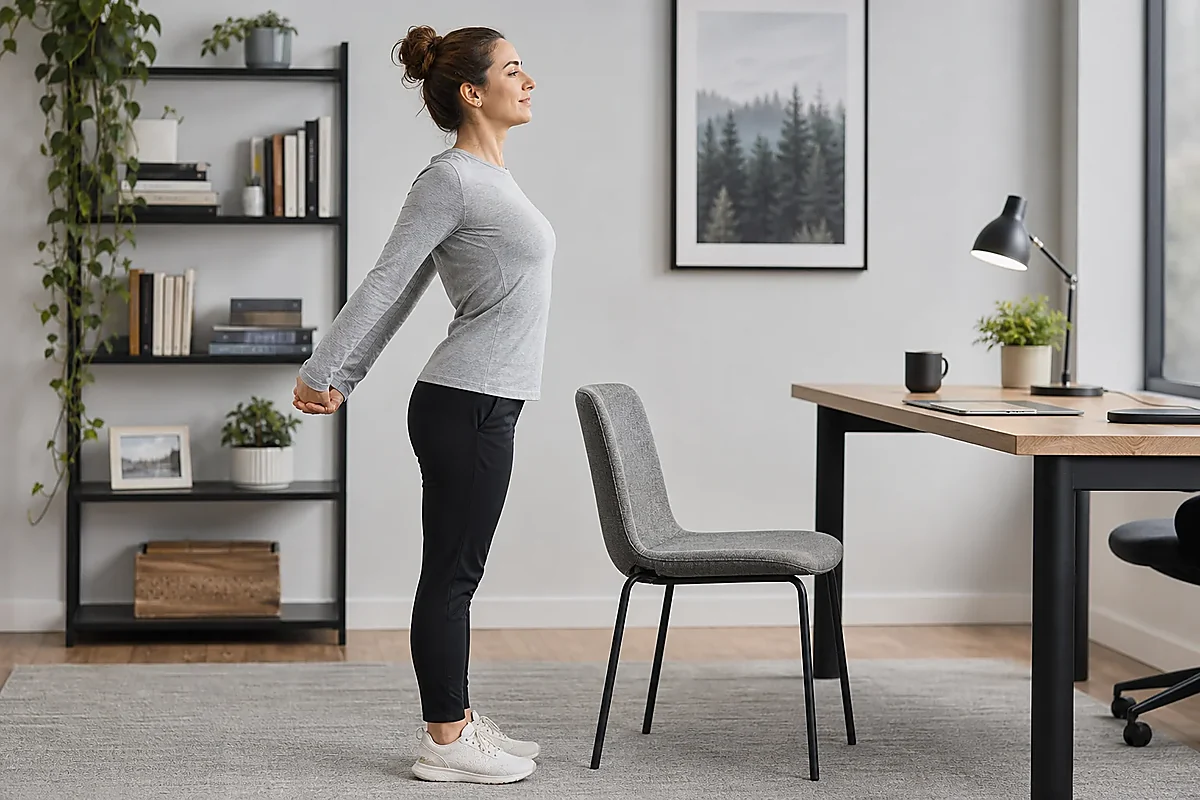
Frequently Asked Questions
Can a chiropractor for posture help with slouching?
A chiropractor for posture may help evaluate spinal motion, muscle tension, work habits, and movement patterns that can influence how you sit, stand, and move. The goal is not an instant posture change, but a personalized plan that may support comfort, mobility, and better awareness over time.
What is poor posture treatment?
Poor posture treatment is not one single service. It may include hands-on care, movement guidance, ergonomic changes, soft tissue work, and home strategies depending on the evaluation. Individual needs vary, so care should be personalized after an appropriate assessment.
Is desk posture pain a reason to get evaluated?
Desk posture pain can be a good reason to schedule an evaluation if discomfort keeps returning, affects your workday, or does not improve with basic movement breaks. A clinician can help identify contributing factors and discuss conservative options.
What should I expect from a posture correction chiropractor?
A posture correction chiropractor may review your symptoms, daily habits, joint motion, muscle tension, and movement patterns. Any care plan should be realistic, individualized, and focused on support rather than promises of a perfect or permanent change.
When should posture-related symptoms be treated as urgent?
Seek urgent care or emergency services for severe or worsening symptoms, especially if discomfort is paired with chest pain, sudden weakness, loss of coordination, trouble walking, fever, unexplained weight loss, or changes in bowel or bladder control.
Summary: A Practical Next Step for Posture Concerns
A search for a Long Island chiropractor for posture problems usually starts with a simple question: is this something worth getting checked? If posture-related tightness, stiffness, or discomfort keeps returning, an evaluation may help you understand contributing factors and choose a conservative plan that fits your life.
If you are looking for a Long Island chiropractic wellness clinic, Back 2 Health offers chiropractic, acupuncture, massage therapy, and cupping options based on the evaluation. To learn more about posture-focused conservative care, visit our chiropractic care page and schedule an appropriate evaluation.