


Chiropractic vs massage therapy is a common question for people dealing with neck pain, back pain, stiffness, or recurring tight muscles. Both options may support comfort and mobility, but they do not focus on the same tissues or use the same methods. The better choice depends on what is contributing to your symptoms, your health history, and your goals.
This article is educational only and is not a diagnosis. Schedule an evaluation with a qualified clinician if symptoms persist or worsen. Individual needs vary, so care should be personalized after an appropriate assessment.
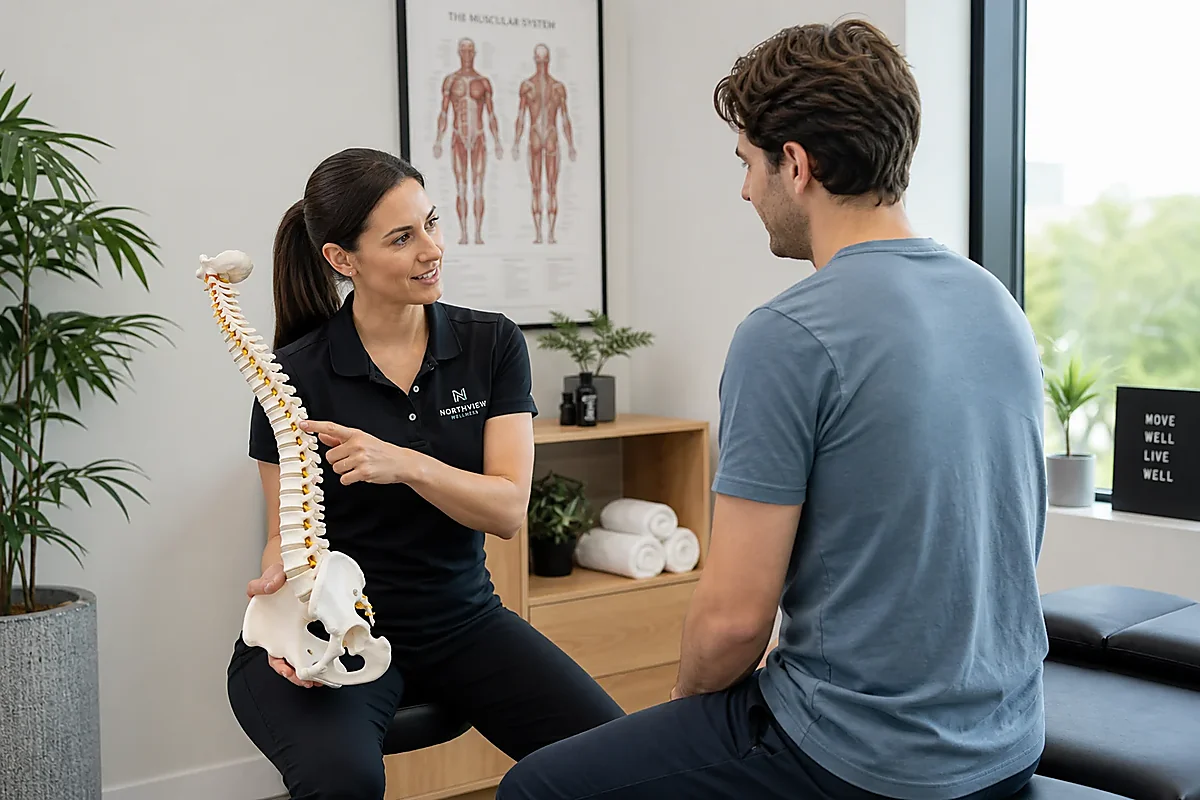
If you are considering chiropractic care, massage therapy, or both, the goal is not to pick a winner in every situation. The goal is to understand what each approach is designed to do and when one may make more sense than the other.
Chiropractic vs massage therapy: the quick answer
Chiropractic care typically focuses on the spine, joints, movement patterns, and how the nervous system and musculoskeletal system work together. Massage therapy typically focuses on muscles, fascia, and other soft tissues. Both can be used for conservative pain relief, but the right fit depends on the evaluation.
- Chiropractic care may be considered when stiffness, limited motion, posture strain, or joint related movement issues are part of the picture.
- Massage therapy may be considered when muscle tension, soreness, stress related tightness, or soft tissue sensitivity are the main concerns.
- Combined care may make sense when joint movement and soft tissue tightness appear to be influencing each other.
According to the National Center for Complementary and Integrative Health, spinal manipulation and massage therapy are commonly used by people seeking help for musculoskeletal discomfort, although results vary by person and condition. You can read more from NCCIH about spinal manipulation and massage therapy.
What chiropractic care usually focuses on
Chiropractic care is often used for spine and joint related concerns, especially when movement feels limited, uneven, or uncomfortable. A chiropractor may assess how your neck, mid back, lower back, hips, shoulders, and other joints move. They may also look at posture, daily habits, muscle guarding, and how your symptoms behave during certain movements.
What an evaluation may look at
An evaluation may include a health history, a discussion of your symptoms, range of motion checks, orthopedic or neurological screening when appropriate, and a conversation about your goals. This does not mean every person needs the same care. It means the clinician is gathering information before recommending any next step.
What care may include
Depending on the assessment, chiropractic care may include manual adjustments, mobilization, stretching guidance, ergonomic suggestions, exercise recommendations, or referral when another type of care is more appropriate. Responsible care should avoid one size fits all plans and should be adjusted based on comfort, response, and clinical findings.
What massage therapy usually focuses on
Massage therapy focuses on soft tissues such as muscles, fascia, and connective tissue. It may help support relaxation, circulation, short term comfort, and reduced muscle guarding for some people. Massage is often used when someone feels tight, sore, overworked, or physically tense from repetitive activity, stress, exercise, or long periods of sitting.
Soft tissue goals
A massage therapist may use different pressure levels, techniques, and areas of focus depending on your comfort and goals. Communication matters. If pressure feels too intense, causes sharp discomfort, or does not match your preferences, you should be able to ask for a change.
When massage may fit
Massage may be a good option to discuss when the main issue feels like muscle tightness, general stiffness, or stress related tension. It may also be used alongside other conservative care when soft tissue tightness is affecting mobility or comfort.
Muscle tension vs joint restriction: why the difference matters
Understanding muscle tension vs joint restriction can make the chiropractic vs massage therapy decision easier. Muscle tension often feels like tightness, knots, soreness, or tenderness in a specific area. Joint restriction may feel like a limited range of motion, stiffness with turning or bending, or discomfort that appears when a joint is loaded or moved in a certain direction.
These categories can overlap. For example, a stiff neck may involve tight upper shoulder muscles and reduced movement in the joints of the neck or upper back. A tight lower back may involve soft tissue guarding, hip mobility limits, work posture, exercise habits, or other factors. Because symptoms can have more than one contributor, an evaluation helps separate symptom education from treatment decisions.
Neck pain treatment options: when each approach may help
Neck pain treatment options often depend on what makes symptoms better or worse. If the issue feels mostly like tight shoulders, stress tension, or soreness after long computer use, massage therapy may be a reasonable option to discuss. If the neck feels restricted, turning is limited, or posture and upper back movement seem involved, chiropractic care may be considered after an assessment.
It is also important to know when neck symptoms need more medical attention. Mayo Clinic notes that neck pain should be evaluated promptly when it is severe, follows an injury, or is accompanied by symptoms such as weakness, numbness, or other concerning changes. Seek urgent care or emergency services for severe or worsening symptoms. For general guidance, see Mayo Clinic’s information on when to seek care for neck pain.
Back pain treatment options: when to consider an evaluation
Back pain treatment options can include education, activity modification, mobility work, chiropractic care, massage therapy, exercise, and other conservative approaches depending on the situation. MedlinePlus explains that back pain is common and can be related to muscles, ligaments, discs, joints, or other factors. Their patient education on back pain is a helpful overview for general information.
If your back feels tight after sitting, lifting, workouts, or long days on your feet, massage may help support soft tissue comfort. If your back feels stiff with bending, twisting, or changing positions, chiropractic care may be part of a plan that looks at joint movement, posture, and mechanics. Neither approach should be presented as a certain solution for everyone. The most appropriate option depends on the assessment.
Massage or chiropractor first: a practical way to decide
If you are asking whether to choose massage or chiropractor first, use your main goal as a starting point. If you mainly want relaxation, stress reduction, or help with generalized muscle tightness, massage therapy may be a good first conversation. If you want a musculoskeletal evaluation for spine or joint movement, posture related stiffness, or recurring neck or back discomfort, chiropractic care may be a good first step.
When symptoms are unclear, an evaluation first approach is often the most useful. A clinician can ask about symptom behavior, daily activities, previous injuries or health issues, and what you have already tried. That conversation can help clarify whether the plan may include chiropractic care, acupuncture, massage therapy, or cupping depending on the evaluation.
Can chiropractic and massage together make sense?
Chiropractic and massage together may make sense when soft tissue tightness and joint movement issues appear to be connected. For example, some people feel that tight muscles limit how comfortably they move, while restricted movement can also make nearby muscles guard or work harder. In that type of situation, a coordinated plan may help support mobility and comfort from more than one angle.
Combined care should still be personalized. It may include chiropractic care, acupuncture, massage therapy, or cupping therapy depending on the evaluation. The plan should be explained in plain language, and you should understand why each service is being recommended.
When to talk to a clinician
Consider scheduling an evaluation when symptoms persist, keep returning, affect your normal activities, or leave you unsure which care option is appropriate. It is also reasonable to ask questions before beginning care, such as:
- What findings are guiding the recommendation?
- Is the main concern more soft tissue related, joint related, or a combination?
- What changes should I look for over time?
- How will the plan be adjusted if I do not respond as expected?
- Are there signs that I should see a different type of provider?
Seek urgent care or emergency services for severe or worsening symptoms, especially if symptoms follow major trauma or include weakness, numbness, fever, loss of bladder or bowel control, chest pain, or other concerning changes.
Why an evaluation first approach is helpful
The chiropractic vs massage therapy question is not only about the therapy. It is about the reason behind the recommendation. Two people can both describe stiffness, but one may benefit from soft tissue work, another may need a joint focused approach, and another may need referral or additional medical evaluation.
A good plan should set realistic expectations, respect your comfort level, and avoid pressure. It should also include practical education, such as movement habits, posture breaks, exercise modifications, or simple ways to reduce repeated strain. Care is most useful when it matches the person, not just the symptom label.
If you’re on Long Island and want help deciding whether chiropractic care, massage therapy, or both may fit your goals, Back 2 Health can walk you through an evaluation first plan.
To learn more about evaluation based spine and joint care, visit Back 2 Health’s page for chiropractic care. If your main concern is soft tissue tension or soreness, you can also review our massage therapy service information.
Summary
Chiropractic vs massage therapy is best understood as a difference in focus. Chiropractic care often looks at spine and joint movement, posture, and musculoskeletal function. Massage therapy focuses more on muscles, fascia, and soft tissue comfort. One is not automatically better for every case of neck pain, back pain, or stiffness.
If symptoms are mild and clearly tied to muscle tension, massage may be a helpful option to discuss. If symptoms involve limited motion, recurring stiffness, or concerns about joint mechanics, chiropractic care may be appropriate to consider. If both muscle tension and joint restriction seem involved, chiropractic and massage together may be part of a conservative plan after an evaluation.

FAQs
Is chiropractic vs massage therapy better for neck pain?
Neither is always better for every person. Chiropractic care may be considered when joint motion, posture, or spine related movement patterns are part of the concern. Massage therapy may be considered when muscle tension, stress related tightness, or soft tissue sensitivity are prominent. A qualified clinician can help you decide after an evaluation.
Should I choose massage or chiropractor first?
If you are unsure, starting with an evaluation is often the most practical step. The clinician can look at movement, symptoms, health history, and goals, then discuss whether chiropractic care, massage therapy, or both may fit your needs.
Can chiropractic and massage together be part of conservative pain relief?
Yes, chiropractic and massage together may be part of a conservative pain relief plan when the evaluation supports both joint focused and soft tissue focused care. The plan should be personalized and adjusted based on how you respond.
What is the difference between muscle tension vs joint restriction?
Muscle tension usually refers to tightness or tenderness in soft tissues. Joint restriction generally refers to a joint not moving comfortably or fully. These can overlap, so an evaluation helps clarify which factors may be contributing to stiffness or discomfort.
When should neck or back symptoms be checked urgently?
Seek urgent care or emergency services for severe or worsening symptoms, especially if symptoms follow major trauma or include weakness, numbness, fever, loss of bladder or bowel control, chest pain, or other concerning changes.