

Cupping therapy vs acupuncture is a common comparison for people exploring conservative ways to manage muscle tension or support recovery. Although both practices have long histories and may appear in the same care plan, they use different tools, create different sensations, and are selected for different reasons.
This article is educational only. Schedule an evaluation with a qualified clinician if symptoms persist or worsen.
Individual needs vary, so care should be personalized after an appropriate assessment.

Cupping Therapy vs Acupuncture: The Quick Answer
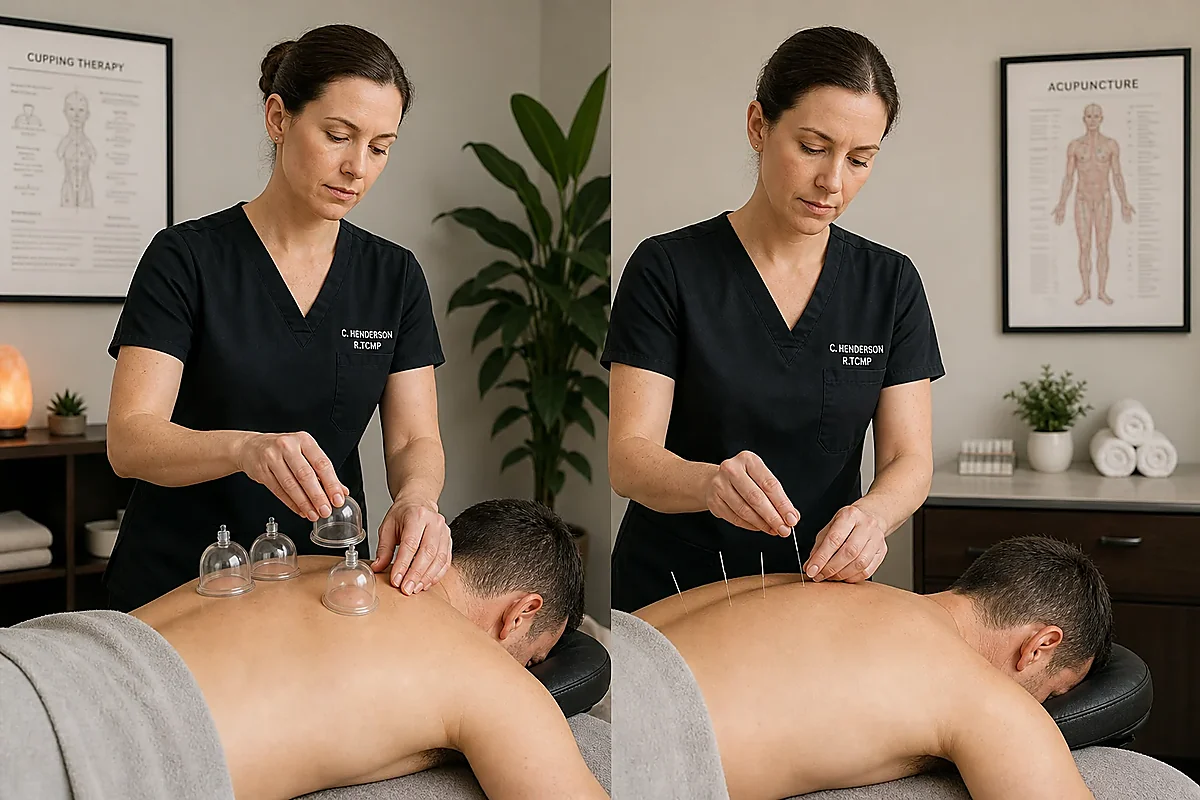
Cupping uses cups and negative pressure, commonly called suction, on selected areas of the skin. Acupuncture uses very thin needles inserted at carefully chosen points. People may consider either approach for temporary muscle tension, soreness, mobility concerns, or general recovery support, but neither method is automatically right for every person or every symptom.
A clinician may recommend one approach, both approaches, or a different option after reviewing the location and behavior of your symptoms, your health history, skin sensitivity, activity demands, and treatment preferences. Care may include chiropractic care, acupuncture, massage therapy, or cupping depending on the evaluation.
How cupping works
During dry cupping, a practitioner places cups on the skin and creates suction inside them. Depending on the goal, cups may remain in one position or move across a lubricated area. The pulling sensation affects the skin and superficial tissues rather than puncturing the skin.
People interested in this method can read more about cupping therapy at Back 2 Health. A consultation should cover the planned technique, expected sensations, possible skin changes, and reasons the method may or may not fit the situation.
How acupuncture works
Acupuncture involves placing sterile, single-use, very thin needles at selected points. Needle depth, location, and retention time depend on the practitioner’s assessment and treatment plan. Some people notice little sensation, while others describe brief pressure, heaviness, warmth, tingling, or a dull ache.
The National Center for Complementary and Integrative Health explains that acupuncture has been studied for several pain-related concerns, although results and the quality of evidence vary by condition. Anyone considering acupuncture at Back 2 Health should receive an individualized assessment rather than selecting treatment from a symptom label alone.
6 Practical Differences Between Acupuncture vs Cupping
1. Tools and techniques
The most visible difference is the equipment. Cupping relies on glass, plastic, or silicone cups that create suction. Acupuncture uses thin needles placed at specific points. Dry cupping does not break the skin, while acupuncture needles do enter the skin and should always be sterile and single use.
2. Treatment goals
Cupping is often directed toward a broader area where someone reports tightness or soreness. Acupuncture point selection may include the uncomfortable area as well as other points chosen according to the clinician’s assessment. The treatment goal should be explained in plain language before care begins.
3. Sensations during care
Cupping usually feels like pulling, pressure, or tightness beneath a cup. Acupuncture may produce a quick pinching sensation followed by mild pressure, tingling, warmth, or heaviness. Strong or sharp discomfort should be reported promptly during either service so the practitioner can reassess.
4. Skin changes afterward
Cupping can leave temporary circular discoloration because suction affects small blood vessels near the skin. Acupuncture generally does not cause broad circular marks, although minor pinpoint bleeding or a small bruise can occasionally occur. These differences may matter when someone has an event, competition, or work obligation involving visible skin.
5. Session structure
Stationary cups may remain in place for a limited period, while moving cups can be guided over a selected region. Acupuncture needles are typically placed and retained while the person rests. Exact timing should be based on technique, response, and practitioner judgment, not a one-size-fits-all formula.
6. How a clinician chooses
The choice between cupping therapy vs acupuncture is not simply a contest between two services. A clinician may look at symptom location, irritability, range of motion, recent activity, previous responses to care, comfort with needles, skin condition, and relevant health history. The assessment also helps identify when conservative wellness care is not the appropriate next step.
Cupping Therapy Benefits and Evidence Limits
Frequently discussed cupping therapy benefits include short-term relaxation, reduced feelings of tightness, and support for comfortable movement. These are possible responses, not promised outcomes. Research findings are mixed, study quality varies, and a positive response in one person does not predict the same result in another.
A systematic review indexed in PubMed compared cupping and acupuncture for pain-related outcomes but also noted limitations in the available evidence. It should not be interpreted as proof that either option is universally superior. Broader clinical context and patient preferences still matter.
Cupping for muscle tension
Cupping for muscle tension is often requested when an area feels tight, tired, or restricted after work, exercise, or repetitive activity. A practitioner may use it to support temporary relaxation and movement comfort. Muscle tension can have many contributors, however, so symptom education should remain separate from the decision to provide treatment.
The clinician may ask when the tension began, what movements affect it, whether there is numbness or weakness, and how it changes with rest or activity. Those details help determine whether cupping may be part of a conservative plan or whether another evaluation is more appropriate.
What research can and cannot tell us
Health research can estimate average outcomes and identify reported risks, but it cannot predict an individual result. The Cleveland Clinic overview of cupping notes possible side effects such as bruising, skin irritation, burns, and infection. Proper screening, clean equipment, suitable technique, and clear aftercare guidance are important.
Using Cupping or Acupuncture for Recovery
Recovery is influenced by workload, sleep, nutrition, stress, training changes, and the nature of the symptoms. No single natural recovery therapy replaces appropriate medical assessment, progressive activity planning, or adequate rest. Cupping or acupuncture may be considered as one supportive part of a broader strategy.
Planning care around activity
Someone considering care before a workout or event should discuss timing with the clinician. Temporary tenderness or visible marks after cupping may affect personal preferences. Responses to acupuncture also vary, with some people feeling relaxed and others preferring time before returning to demanding activity.
Sports recovery cupping is sometimes chosen for a particular tight or heavily used region. Acupuncture may be considered when a practitioner wants to use a different point-based approach. Treatment should be adjusted to the person’s activity, current presentation, and response rather than applied through a standard sports protocol.
When combined care may make sense
Acupuncture and cupping can sometimes be used in the same visit or during different stages of a care plan. Combining them does not automatically produce a stronger result. Each service should have a clear purpose, and the practitioner should explain what will be done, what the person may feel, and what alternatives are available.
A conservative plan may include chiropractic care, acupuncture, massage therapy, or cupping depending on the evaluation. The plan should also be updated if symptoms change or the expected response does not occur.
Cupping Marks Explained

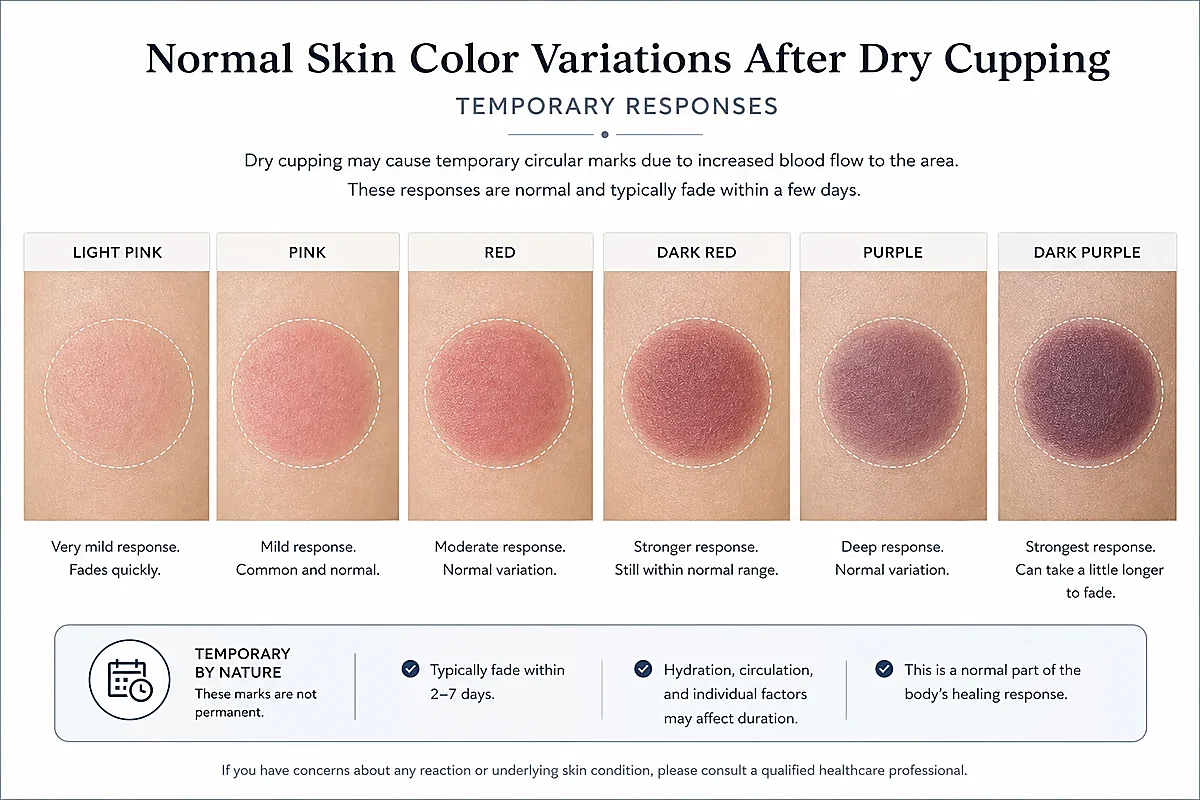
The circular marks associated with dry cupping can range from light pink to darker red or purple. Their appearance may vary based on suction strength, placement, skin characteristics, and how long a cup remains in place. Darker color does not prove that an area was more damaged, contained more toxins, or received a more effective treatment.
Marks are generally temporary, but the time needed for them to fade varies. They may feel mildly tender. A practitioner should explain what is expected and provide guidance about unusual reactions, such as blistering, increasing pain, spreading redness, drainage, or other signs of significant skin irritation.
What comes out during cupping?
Nothing is drawn out of the body during dry cupping. Suction changes pressure at the skin’s surface and can produce temporary discoloration. Describing these circles as toxins leaving the body is not an evidence-based explanation.
When to Talk to a Clinician
Consider an evaluation when muscle tension or soreness persists, repeatedly returns, limits activity, or is accompanied by symptoms that are difficult to explain. An assessment does not commit you to treatment. It provides an opportunity to discuss likely care options, expected benefits, limitations, and reasons for referral.
Tell the clinician about skin conditions, recent procedures, bleeding concerns, sensitivity to adhesives or oils, and medications that may affect bruising or bleeding. Do not stop or change medication based on a wellness article. Medication questions should be directed to the prescribing clinician.
Questions to ask before treatment
- What did the evaluation identify, and why are you suggesting this approach?
- What sensations and temporary skin changes might occur?
- What are the alternatives if I prefer not to use needles or cups?
- How will you monitor my response and adjust the plan?
- What symptoms would mean I should contact a medical professional?
Sudden weakness, significant numbness, trouble breathing, chest pain, loss of consciousness, major trauma, or rapidly changing symptoms require medical attention rather than routine wellness care. Seek urgent care or emergency services for severe or worsening symptoms.
Frequently Asked Questions
Is there a downside to cupping?
Cupping can cause temporary circular marks, tenderness, skin irritation, or lightheadedness. Burns or infection are possible if poor technique or unsuitable equipment is used. An appropriately trained clinician should review your health history and skin condition first.
Can you do acupuncture and cupping together?
They may be included in the same conservative care plan when an evaluation supports both approaches. The clinician should explain the purpose, sequence, expected sensations, and alternatives before proceeding.
What areas should not be cupped?
Cups generally should not be placed over broken, infected, severely irritated, or recently injured skin. Other areas or circumstances may require caution, so placement should be selected by a qualified clinician after screening.
What comes out during cupping?
Nothing is pulled out of the body during dry cupping. The cup creates suction at the skin’s surface. The temporary color change reflects a local response to pressure and small blood vessels, not toxins leaving the body.
Is sports recovery cupping better than acupuncture?
Neither option is automatically better for every athlete or activity. The choice depends on symptoms, timing, skin sensitivity, preferences, health history, and the findings of an appropriate evaluation.
Summary
When comparing cupping therapy vs acupuncture, the central difference is how each method is applied. Cupping uses suction over selected areas, while acupuncture uses thin needles at selected points. Both may be part of a personalized conservative care plan, but expected sensations, skin effects, safety considerations, and individual preferences differ.
If you’re on Long Island and want conservative recovery options like acupuncture or cupping, Back 2 Health can help you understand what may fit your situation.
To discuss whether suction-based care may support your goals, learn more about cupping therapy and schedule an appropriate evaluation.
Back 2 Health provides conservative chiropractic, acupuncture, massage therapy, and cupping services across its service area. Last updated September 10, 2026.