

Massage therapy for tight muscles is often considered when stretching, rest, or a warm shower do not seem to loosen the area enough. Tightness can feel like a dull ache, stiffness, reduced range of motion, or a band of tension that keeps returning during work, exercise, or daily routines.
This article is educational only and is not a diagnosis. If symptoms persist or worsen, schedule an evaluation with a qualified clinician so your situation can be assessed appropriately. Individual needs vary, so care should be personalized after an appropriate assessment.
Massage Therapy for Tight Muscles: The Quick Answer
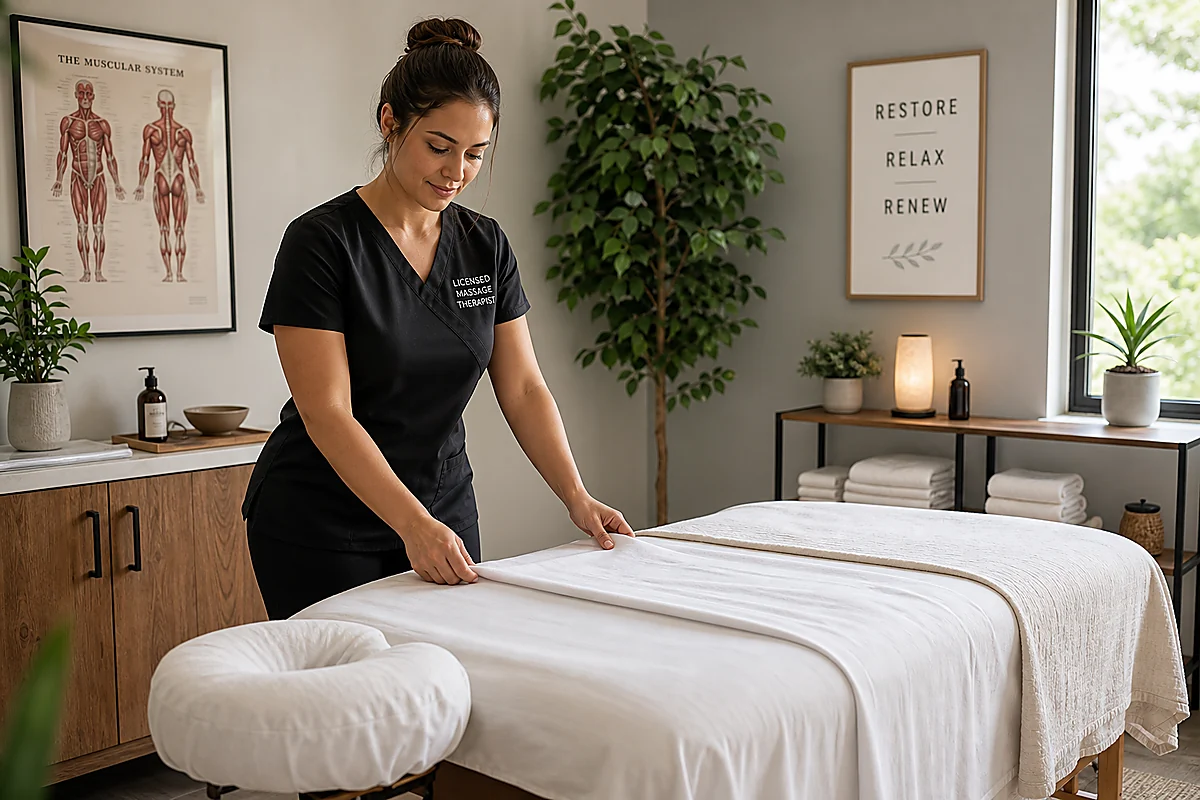
Massage therapy for tight muscles may help support relaxation, circulation to soft tissues, comfort, and easier movement for some people. It is often used as part of a conservative care plan when muscle tension is related to posture, activity, stress, repetitive use, or general stiffness.
At Back 2 Health, massage therapy may be recommended on its own or as part of a broader plan, depending on your evaluation and goals. The National Center for Complementary and Integrative Health notes that massage therapy is commonly used for wellness and pain-related concerns, although results vary by person and condition. You can review their patient information here: NCCIH massage therapy overview.
A practical way to think about massage is this: it may help calm overworked tissues, but it should not be used to force the body into change. Good care should match the pressure, technique, and frequency to the person in front of the clinician.
Why Muscles Can Feel Tight
Muscle tightness is a common description, but it can come from different causes. Some people feel tight after a workout. Others notice tension after sitting at a desk, driving, sleeping awkwardly, lifting, or carrying stress in the shoulders and jaw. Tightness can also show up when the body is protecting an irritated area.
Common patterns people notice
People often seek massage for muscle tension in areas such as the neck, shoulders, upper back, low back, hips, calves, or forearms. The feeling may be mild and temporary, or it may keep returning with the same activities.
- Stiffness after sitting for long periods
- Tight shoulders after computer work
- Calf or hip tightness after running or training
- Upper back tension during stressful weeks
- Reduced ease of motion during stretching or exercise
These patterns do not automatically point to one specific cause. A clinician may look at your movement, activity habits, comfort level, and medical history before recommending care.
When tightness is more than a simple sore spot
Sometimes tightness comes with symptoms that deserve medical attention. Seek urgent care or emergency services for severe or worsening symptoms. This is especially important if muscle pain or tightness is linked with chest pain, trouble breathing, sudden weakness, major swelling, fever, new numbness, or symptoms after a significant fall or injury.
For general patient education about muscle aches, MedlinePlus offers a helpful overview here: MedlinePlus muscle aches.
When Massage Therapy for Tight Muscles May Help
Massage therapy for tight muscles may be helpful when the main goal is to support relaxation, comfort, and easier movement. It can be a reasonable option when tightness seems connected to overuse, stress, posture habits, or recovery between activities.
Massage for muscle tension and stress
Stress and muscle guarding often travel together. Many people notice that their shoulders, neck, or upper back feel more restricted during demanding workweeks. Massage for muscle tension may help the nervous system shift toward relaxation, which can make muscles feel less guarded for a period of time.
This does not mean massage removes the original cause of tension. If a workstation, sleep position, training load, or movement pattern keeps irritating the same area, symptoms may return. That is why education and follow-up guidance can be just as important as the session itself.
Massage for recovery after activity
Massage for recovery is commonly used by active adults who want to manage soreness, improve perceived readiness, or maintain mobility between workouts. For some people, a lighter session after intense training feels better than deep pressure. For others, more specific work may be appropriate later in the recovery window.
Sports massage recovery should be matched to the person, the sport, and the timing. A runner with calf tightness, a lifter with upper back tension, and a weekend tennis player with hip stiffness may need different techniques and different recommendations.
Trigger point massage for sensitive knots
Trigger point massage focuses on specific sensitive points in muscle tissue that may feel like knots or tight bands. A therapist may apply sustained, focused pressure or combine pressure with gentle movement. The goal is not to push through pain. The goal is to work at a level that is tolerable and clinically appropriate.
If pressure causes sharp pain, numbness, tingling, dizziness, or symptoms that travel in an unusual way, the approach should be changed and the situation should be reassessed.
Deep Tissue Massage Benefits and When Lighter Work Is Better
Deep tissue massage benefits may include a feeling of reduced stiffness, improved relaxation, and better tolerance for movement in some people with deeper soft tissue tension. It typically uses slower strokes and firmer pressure than a relaxation massage.
Still, deeper is not automatically better. Some tight muscles are irritated, sensitized, or guarding for a reason. If pressure is too aggressive, the body may respond with more soreness or guarding. A skilled provider should communicate with you during the session and adjust pressure based on comfort, tissue response, and your goals.
Lighter work may be a better fit when symptoms are new, the area is highly sensitive, you are recovering from intense activity, or you simply respond better to gentler techniques. The right choice depends on the evaluation, not on the idea that one massage style is best for everyone.
When to Combine Massage and Chiropractic Care
Massage and chiropractic care may make sense together when both soft tissue tension and joint mobility or movement patterns appear to be part of the concern. For example, someone may feel tight in the upper back from long desk hours and also have limited motion through the neck or mid-back. Another person may feel hip or low back tightness that relates to how they move during exercise.
In those situations, chiropractic care may focus on joint function, movement quality, posture education, and conservative care recommendations, while massage therapy may focus on muscle tension and soft tissue comfort. Care may include chiropractic care, acupuncture, massage therapy, or cupping depending on the evaluation.
What an evaluation may look at
An evaluation may include questions about when the tightness started, what makes it better or worse, what activities you do often, and whether symptoms are changing. A clinician may also look at range of motion, muscle tenderness, posture habits, and movement patterns.
This step matters because tightness is a symptom description, not a complete plan. Two people can describe the same area as tight, but one may need recovery guidance, another may need strength or mobility work, and another may need referral for medical evaluation.
How combined care may be personalized
A personalized plan may use massage before chiropractic care to help an area feel more relaxed, or massage after an adjustment or movement-focused visit to support comfort. In other cases, sessions may be scheduled separately. The best sequence depends on your response and the clinician’s judgment.
Some people may also discuss supportive options such as acupuncture at Back 2 Health or cupping therapy if those services fit their goals and evaluation findings. Combined care should be based on need, not on adding services for the sake of doing more.
When to Talk to a Clinician
Consider scheduling an evaluation if tightness keeps returning, limits normal activity, affects sleep, or does not improve with reasonable self-care. It is also a good idea to get checked if tightness is paired with numbness, tingling, weakness, swelling, fever, unexplained symptoms, or significant pain.
Cleveland Clinic provides plain-language education on muscle pain and possible causes here: Cleveland Clinic muscle pain overview. Online education can help you ask better questions, but it should not replace an in-person assessment when symptoms are persistent, severe, or changing.
If you are on Long Island and want a plan that may combine massage therapy with chiropractic care, Back 2 Health can help you choose the right next step.
To learn more about whether massage therapy may fit your goals, schedule an evaluation and talk with a qualified clinician about your symptoms, activity level, and preferences.
FAQs About Massage Therapy for Tight Muscles
How often should I get massage therapy for tight muscles?
Frequency depends on your goals, activity level, health history, and how your body responds. Some people use massage occasionally for short-term tension, while others include it in a broader wellness or recovery plan after an appropriate assessment.
Is deep tissue massage always better for tight muscles?
No. Deep tissue massage benefits some people with deeper soft tissue tension, but firmer pressure is not always the best choice. A lighter approach may be more appropriate if an area is sensitive, irritated, or new to bodywork.
Can massage and chiropractic care be done together?
Massage and chiropractic care may complement each other when tight muscles and joint mobility concerns are both part of the picture. The right order and approach should be personalized after an evaluation.
What is trigger point massage?
Trigger point massage is a technique that applies focused pressure to specific sensitive points in muscle tissue. It may help some people feel less guarded or restricted, but pressure should be adjusted to comfort and clinical judgment.
Can massage help with sports massage recovery?
Massage may support sports massage recovery by helping with relaxation, perceived soreness, and mobility after training. It should be matched to the athlete, timing, and overall recovery plan.
Summary
Massage therapy for tight muscles may support relaxation, comfort, mobility, and recovery for some people, especially when tightness relates to stress, repetitive use, posture habits, or activity. It is not a one-size-fits-all solution, and it should not be used to push through severe or unexplained symptoms.
The most helpful approach is usually personalized. A qualified clinician can help determine whether massage, chiropractic care, or another conservative service is appropriate based on your assessment, goals, and response to care.