


Lower back discomfort is one of the most common reasons adults seek professional care. Many people exploring options come across chiropractic for lower back pain and wonder what it actually involves, what it may help with, and whether it’s worth considering as part of a conservative care plan.
This article explains how chiropractic care is commonly used for back discomfort, what typically happens during an evaluation, and when it may be appropriate to seek professional guidance.
This information is educational only and should not replace personalized medical advice. If symptoms persist or worsen, consider scheduling an evaluation with a qualified healthcare professional because individual needs vary.
Chiropractic for Lower Back Pain: What It Is and Why People Consider It
Chiropractic care focuses on the relationship between the spine, joints, muscles, and the body’s ability to move comfortably. Many people explore chiropractic for lower back pain when stiffness, tension, or limited mobility begins to affect daily activities.
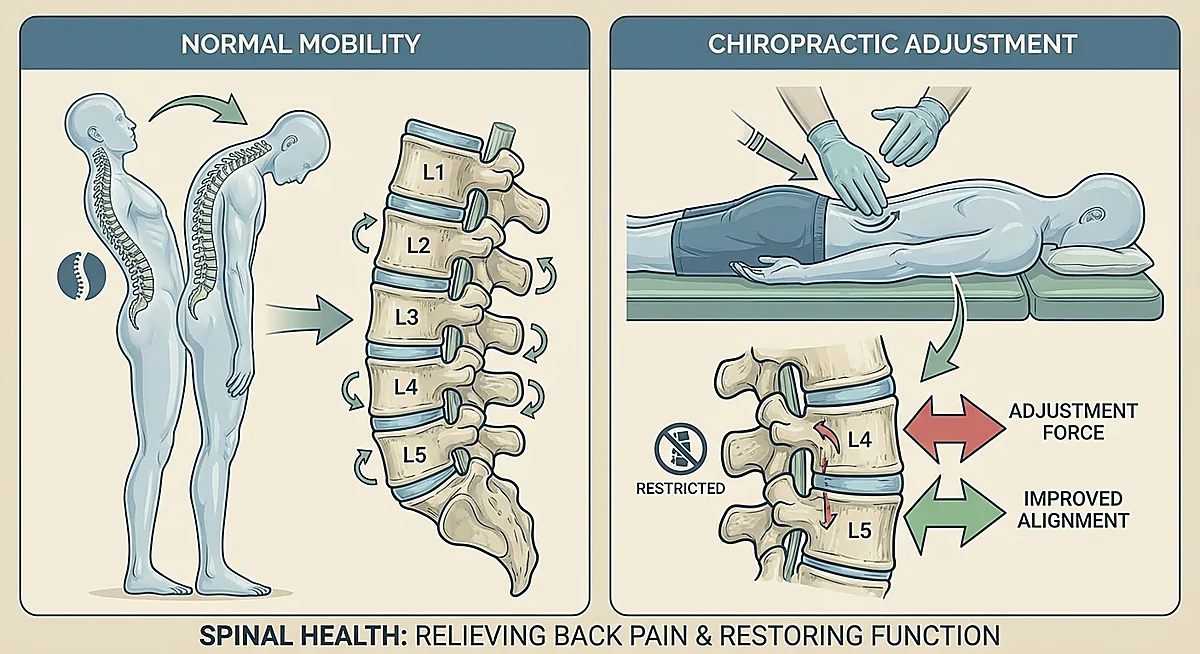
The lower back, also called the lumbar spine, supports much of the body’s weight and plays a major role in bending, lifting, and walking. Because it moves frequently and handles a significant load, it can sometimes develop irritation or restricted motion in joints and surrounding muscles.
According to Harvard Health Publishing, spinal manipulation is one approach that may be used to help some people manage mechanical lower back pain and improve movement.
People commonly look for lower back pain relief when they experience:
- Persistent stiffness after sitting or driving
- Discomfort with bending or lifting
- Reduced flexibility in the lower back
- Tight muscles around the hips or spine
- General movement-related back discomfort
Because these symptoms can arise from many different factors, a professional evaluation helps determine whether chiropractic care may be appropriate.
What a Chiropractor for Back Pain Typically Evaluates
If someone visits a chiropractor for back pain, the process usually begins with an evaluation rather than immediate treatment. This step helps the clinician understand how the spine and surrounding muscles are functioning.
Health history and movement assessment
The clinician may ask questions about when the discomfort began, what movements trigger it, and whether certain activities make it better or worse. Daily habits such as sitting, lifting, or exercising can also provide helpful clues.
Looking at posture, joint motion, and muscle tension
The evaluation often includes observing posture, checking spinal movement, and assessing muscle tightness around the back and hips. These observations help determine whether restricted joint motion, muscle tension, or other movement patterns may be contributing to symptoms.
If chiropractic care appears appropriate, the clinician may discuss options such as chiropractic care as part of a personalized plan. Many patients begin this process at a chiropractic wellness clinic, where clinicians focus on conservative approaches that support mobility, posture, and musculoskeletal health.
What Is a Spinal Adjustment for Back Pain?
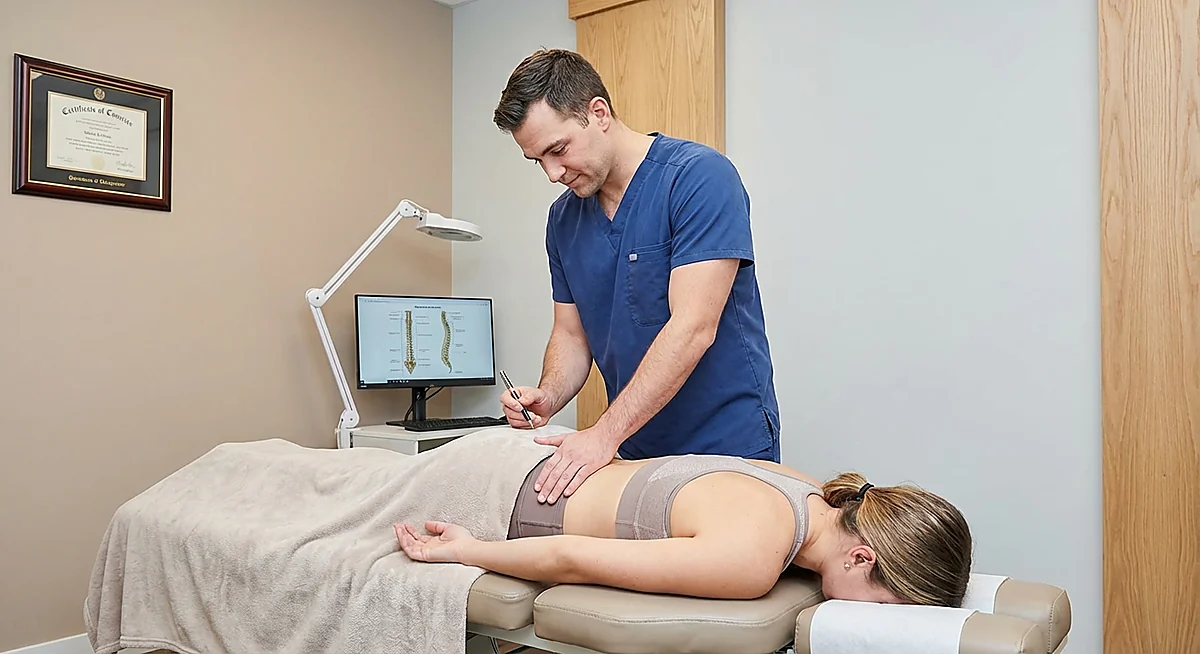
A spinal adjustment for back pain is a hands‑on technique used by chiropractors to help improve joint movement in the spine. During an adjustment, controlled pressure is applied to specific spinal joints.
According to the Mayo Clinic, chiropractic adjustments aim to improve spinal motion and the body’s physical function.
When joints in the spine move more freely, surrounding muscles may also experience reduced tension and improved coordination. For some individuals, this may contribute to better mobility and comfort.
The Cleveland Clinic notes that spinal manipulation is commonly used to address musculoskeletal conditions including neck and back discomfort.
In addition to adjustments, care may sometimes include:
- Guided mobility or stretching exercises
- Soft‑tissue techniques
- Movement or posture education
- Advice on activity modification during recovery
The exact approach depends on the evaluation findings and the individual’s goals.
Chiropractic as a Conservative Back Pain Treatment
Many people prefer starting with conservative back pain treatment options before considering more invasive approaches. Conservative care typically focuses on improving movement, supporting muscle balance, and encouraging healthy spinal mechanics.
Chiropractic care is often considered part of this category because it is non‑surgical and generally focuses on physical function and mobility.
Depending on the evaluation, a care plan may include a combination of services such as chiropractic care, massage therapy, acupuncture, or cupping therapy to support muscle relaxation and joint mobility.
These approaches are sometimes used together because muscle tension, joint stiffness, and movement habits often interact with each other.
Back Stiffness Treatment and Daily Habits That May Help
Many people who search for care are not only dealing with discomfort but also significant stiffness. A typical back stiffness treatment approach may combine professional care with everyday movement habits that support spinal health.
Examples include:
- Changing positions regularly if you sit for long periods
- Maintaining gentle daily movement such as walking
- Improving workstation ergonomics
- Strengthening the muscles that support the spine
- Stretching tight hip and back muscles
While these habits may help support mobility, persistent or worsening stiffness should still be evaluated by a qualified clinician to determine the underlying cause.
When to Get Evaluated for Persistent Lower Back Pain
Occasional back discomfort can happen after activity, prolonged sitting, or unfamiliar movement. However, some situations may benefit from professional evaluation.
Consider speaking with a healthcare professional if you experience:
- Back discomfort that lasts more than several weeks
- Recurring stiffness that interferes with daily activities
- Limited mobility or difficulty bending or twisting
- Symptoms that return frequently after activity
Because the lower back connects with many nerves and muscles, identifying the factors involved can help guide an appropriate care plan.
Seek urgent care or emergency services for severe or worsening symptoms, especially if back discomfort occurs after a significant fall or accident, or if it is accompanied by serious neurological symptoms.
Summary: Understanding Chiropractic Care for Back Discomfort
Exploring chiropractic for lower back pain can be a step toward understanding how spinal movement, muscle tension, and posture interact. Chiropractic care is often used as a conservative option aimed at improving mobility and supporting the body’s natural movement patterns.
Because every person’s situation is different, care decisions should always follow a professional evaluation. A clinician can help determine whether chiropractic care, acupuncture, massage therapy, or another approach may be appropriate based on your specific needs.
If you’re on Long Island and want a clear, conservative chiropractic plan, Back 2 Health can help you get evaluated and choose the location that fits you best. Learn more about chiropractic care at Back 2 Health.
Frequently Asked Questions
Is chiropractic safe for lower back pain?
Chiropractic care is commonly used for musculoskeletal discomfort, including lower back issues. Research summarized by major medical organizations suggests spinal manipulation may help some individuals improve mobility and reduce discomfort. An evaluation helps determine whether it is appropriate for a specific situation.
What does a chiropractor for back pain actually do?
A chiropractor for back pain typically assesses posture, joint movement, and muscle tension. Based on the findings, care may include spinal adjustments, mobility work, and guidance on daily habits that support spinal function.
How many visits are usually needed for lower back pain relief?
The number of visits varies widely. Some people seek short‑term support for temporary discomfort, while others use periodic visits as part of a broader conservative back pain treatment strategy. A personalized plan is usually discussed after evaluation.
Are there side effects after a spinal adjustment for back pain?
Some individuals notice mild soreness or temporary stiffness after an adjustment, similar to the feeling after exercise. These effects are typically short‑lived. If symptoms are severe or continue to worsen, it is important to seek medical guidance.