

Stress can show up in more than one way. For some people it feels mental, like racing thoughts or trouble winding down. For others it feels physical, like a clenched jaw, tight shoulders, an achy neck, or a body that never seems to fully relax. That overlap is one reason many people ask about acupuncture for stress and tension.
This article is for educational purposes only. If symptoms persist or worsen, schedule an evaluation with a qualified clinician.
If you are looking for a conservative approach, acupuncture may be part of a plan that supports relaxation, helps with muscle tightness, and may improve pain that seems to build when stress is high. It is not a one-size-fits-all solution, and it should not replace evaluation when symptoms are ongoing, severe, or unclear.
According to Mayo Clinic, acupuncture is commonly used for pain and is also used for overall wellness, including stress management. Johns Hopkins Medicine also includes acupuncture among integrative approaches people may consider for stress support.
Acupuncture for stress and tension: a practical overview
When people search for acupuncture for stress and tension, they are often talking about a mix of symptoms rather than one isolated problem. Stress can influence sleep, breathing patterns, posture, jaw clenching, muscle guarding, and the way the body processes discomfort. Over time, that can leave someone feeling stiff, sore, mentally drained, or less able to recover from daily demands.
Acupuncture is often used as part of conservative care for people who want support without jumping straight to more invasive options. In plain terms, it is used by trained providers to address patterns of discomfort and tension with a goal of supporting the body’s normal regulation and recovery processes.
That does not mean every type of tension is caused by stress, and it does not mean acupuncture is the only option. Individual needs vary, so care should be personalized after an appropriate assessment.
For readers exploring care options, acupuncture at Back 2 Health may be part of a conservative plan when stress, tight muscles, and recovery concerns overlap.
How acupuncture for stress relief may support the body
People often ask how acupuncture for stress relief is supposed to work. While research is still evolving, one reason it gets attention is that stress is not only emotional. It also affects the nervous system, muscle tone, circulation, and pain sensitivity. A person under ongoing stress may notice they feel on edge, have trouble relaxing, or carry tension in the neck, shoulders, mid back, or jaw.
Acupuncture may help support a shift away from that constant always-on feeling. Some people describe feeling calmer after treatment, while others notice less body tension or an easier time settling down later in the day. A peer-reviewed study available through PubMed Central looked at acupuncture in people with increased stress levels and adds to the broader discussion on how it may be used in this setting.
It is important to keep expectations realistic. Acupuncture is not a certain answer for every stress-related complaint, and it should not be framed as a permanent solution. Instead, it may be one supportive tool within a broader wellness and recovery plan.
Benefits people hope for may include:
- A greater sense of relaxation
- Less physical tightness in areas that tense up under stress
- Support for overall recovery when stress and discomfort feed into each other
- A structured appointment that encourages people to slow down and pay attention to symptoms
Some people respond quickly, while others need more time and a broader plan. That is one reason a thoughtful evaluation matters.
Acupuncture for muscle tension and pain relief
Stress is often felt in the muscles first. Common complaints include tight shoulders, an achy upper back, a stiff neck, low back tension after long workdays, or a sense that the body never fully lets go. In those situations, people may ask about acupuncture for muscle tension or acupuncture for pain relief because the discomfort feels tied to daily pressure, poor recovery, or long hours in one position.
Acupuncture for muscle tension may help support relaxation in overworked areas and may improve comfort for some people. That can be especially relevant when the body has settled into a pattern of guarding, shallow breathing, and reduced movement. The goal is not to make sweeping promises, but to help reduce the cycle where stress increases tension and tension increases stress.
Acupuncture for pain relief is also a common reason people seek care. Pain can become more noticeable when sleep is poor, workload is high, or the nervous system is under strain. In that context, conservative care may focus on improving how the body handles stress and movement, not just chasing one sore spot.
Areas people often ask about include:
- Neck and shoulder tightness
- Tension through the upper back
- Jaw clenching related discomfort
- Low back soreness that builds after sitting or standing
- General muscle tightness after physically demanding weeks
When discomfort and stress show up together, treatment may include more than one approach depending on the evaluation. Combined care may include chiropractic care, acupuncture, massage therapy, or cupping depending on the assessment and the person’s goals.
This is also where acupuncture and recovery becomes an important idea. Recovery is not just for athletes. It applies to anyone whose body feels rundown, overworked, or slow to bounce back after exercise, travel, repetitive work, poor sleep, or prolonged stress. Acupuncture and recovery may fit together when the goal is to support relaxation, movement, and a better overall response to physical strain.
What to expect at an acupuncture wellness clinic
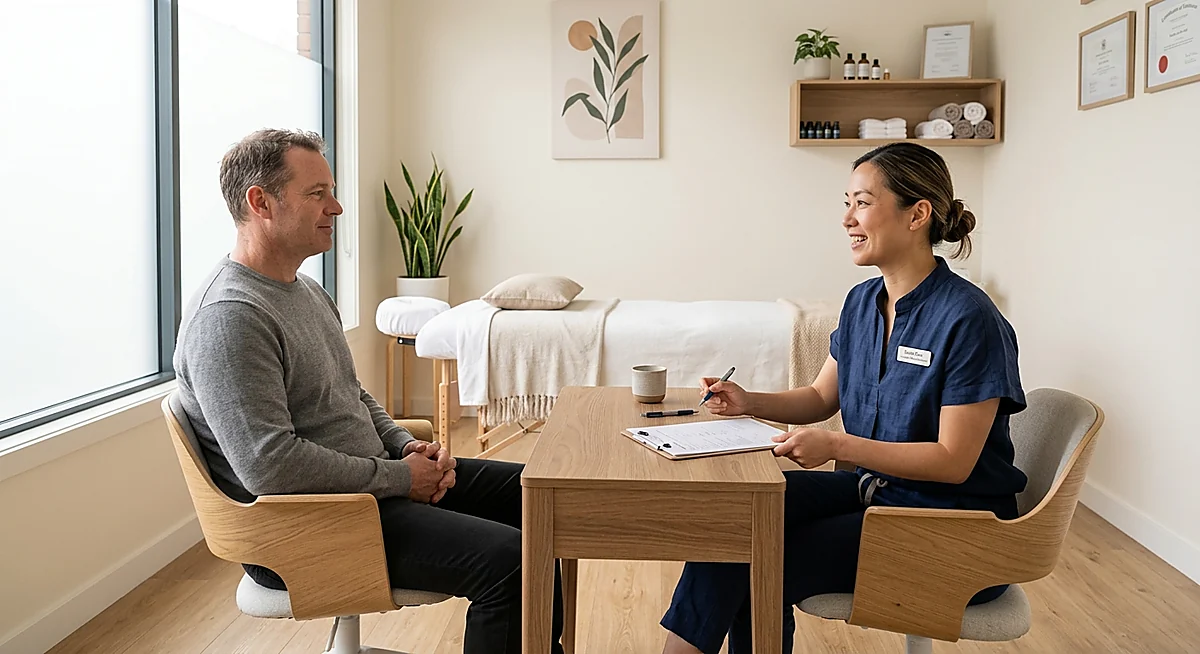
If you have never been before, you may wonder what happens at an acupuncture wellness clinic. In a responsible setting, the visit should begin with questions, not assumptions. A provider may ask what you are feeling, how long it has been going on, what makes symptoms better or worse, what your health history includes, and what your goals are.
That evaluation matters because not every person with stress or tension needs the same plan. Someone with work-related neck tightness may need a different approach than someone dealing with poor sleep, whole-body muscle guarding, or recurring soreness after activity.
During the appointment, the provider may also look at things like:
- Where tension tends to build
- How symptoms affect daily activities
- Whether sleep, workload, posture, or recovery habits seem to contribute
- Whether other conservative services may make sense as part of the plan
Many people report that acupuncture sessions are relatively gentle, but experiences can vary. If you are considering care, ask questions such as:
- What is the goal of treatment in my case?
- How will progress be measured?
- How many visits might be reasonable to trial before reassessing?
- Would another conservative option also make sense for me?
- Are there any symptoms that should be evaluated medically first?
These questions can help keep care realistic, individualized, and centered on function rather than hype.
Natural stress relief options that may work alongside acupuncture
People interested in acupuncture are often also looking for natural stress relief options they can use outside the clinic. That makes sense, because no single appointment can replace daily habits that influence recovery.
Supportive strategies may include:
- Keeping a more regular sleep schedule
- Taking short movement breaks during long periods of sitting
- Gentle mobility work for commonly tight areas
- Breathing exercises that help slow the body down
- Reducing overload where possible, including unrealistic activity spikes
- Spacing out physically demanding tasks when symptoms flare
These tools are not dramatic, but they are practical. They may work better when paired with a care plan that matches the person’s symptoms and goals. Depending on the evaluation, that plan may include acupuncture, massage therapy, chiropractic care, or cupping.
For some readers, the most useful next step is not choosing one method in isolation. It is understanding which combination fits the pattern of symptoms. If stress seems to be driving muscle guarding and soreness, one approach may help. If mobility restriction or posture-related strain is also part of the picture, another service may be added after an assessment.
When to get evaluated
If stress-related tightness is mild and short lived, self-care may be enough. But if the problem keeps coming back, lasts longer than expected, interferes with sleep or work, or seems to spread into more persistent discomfort, it is reasonable to get evaluated.
Consider talking with a qualified clinician if:
- You keep feeling tense even after rest
- Muscle tightness is affecting concentration, sleep, or movement
- Pain keeps returning with work stress or daily activities
- You are unsure whether symptoms are stress-related or something else
- You want a personalized conservative care plan instead of guessing
Educational content can help you understand possibilities, but it cannot determine what is causing your symptoms. Individual needs vary, so care should be personalized after an appropriate assessment.
Seek urgent care or emergency services for severe or worsening symptoms.
That includes situations such as sudden severe pain, new chest pain, trouble breathing, weakness, fainting, major neurologic changes, or other symptoms that feel alarming or rapidly progressive.

Frequently asked questions about acupuncture for stress and tension
Can acupuncture for stress and tension help with tight shoulders and neck discomfort?
It may help support relaxation and may improve muscle tension for some people, especially when stress and physical tightness overlap. An evaluation can help determine whether acupuncture, massage therapy, chiropractic care, or a combination may be appropriate.
What does acupuncture for stress relief usually feel like?
Many people describe it as a calming experience with minimal discomfort, though experiences vary. Individual needs vary, so care should be personalized after an appropriate assessment.
Is acupuncture for pain relief the same as support for stress?
Not exactly. The same visit may address more than one concern, but symptom education and treatment planning should be based on an evaluation rather than assumptions.
How many sessions of acupuncture and recovery support might someone need?
That depends on the person, their goals, and how long symptoms have been present. A qualified clinician can recommend a schedule after an appropriate assessment.
Are there natural stress relief options to use along with acupuncture?
Yes. Depending on the evaluation, a broader conservative plan may also include sleep support, pacing, breathing exercises, movement, massage therapy, chiropractic care, or cupping.
Summary
Acupuncture for stress and tension is often explored by people who feel the effects of stress in both mind and body. It may help support relaxation, may improve muscle tightness, and may be part of a conservative approach to pain relief and recovery. It is best viewed as one tool within a broader plan, not a certain answer or a substitute for proper evaluation.
If you are considering an acupuncture wellness clinic, look for a practical, assessment-first approach that takes your symptoms, routines, and goals into account. The right plan may be simple, or it may combine services based on what the evaluation shows.
If you’re on Long Island and want a conservative plan that may include acupuncture, Back 2 Health can help you schedule an evaluation at the most convenient office.
To learn more about options for acupuncture at Back 2 Health, explore the service page and decide whether an evaluation makes sense for your situation.